 MR. MAN
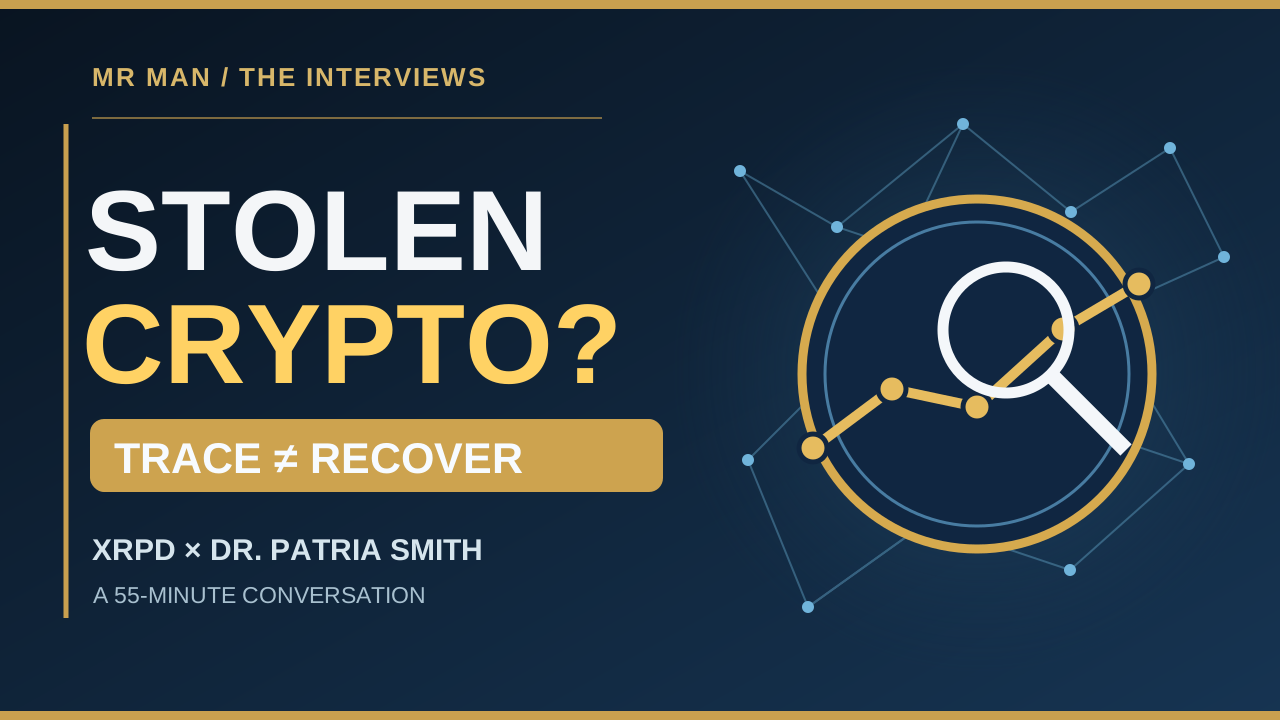
What we discussed
The conversation begins with Dr. Smith's background and the experiences that led her into cryptocurrency. From there, we examine the challenges facing people who have lost assets and the systems XRPD is developing to help them understand transactions and prepare evidence.
The fraud portal and Defraud Wizard
We discuss the steps a user may take after discovering an unauthorized transaction, including wallet addresses, transaction trails, forensic reports, and information requested by exchanges or law enforcement.
Tracing versus recovery
We discuss a publicly described XRP tracing case and ask what happens after funds are located. The guest explains that XRPD does not itself recover victims' money and that recovery may require exchanges, attorneys or law enforcement.
Professional standards and investor protection
We explore investigative qualifications, jurisdictional requirements, evidence standards, project due diligence and proposed escrow protections.
Wallet security and avoiding impersonators
We also discuss reported wallet incidents, safer habits for managing digital assets and how to recognize fake customer-support accounts.
About the discussion
This is a substantive conversation intended to help viewers distinguish useful blockchain evidence from claims that have not been independently verified. It is not an endorsement of any product or a recommendation to invest, and it is not financial or legal advice.